
Cybersecurity in 2026: Top Business Security Threats & Protection Strategies
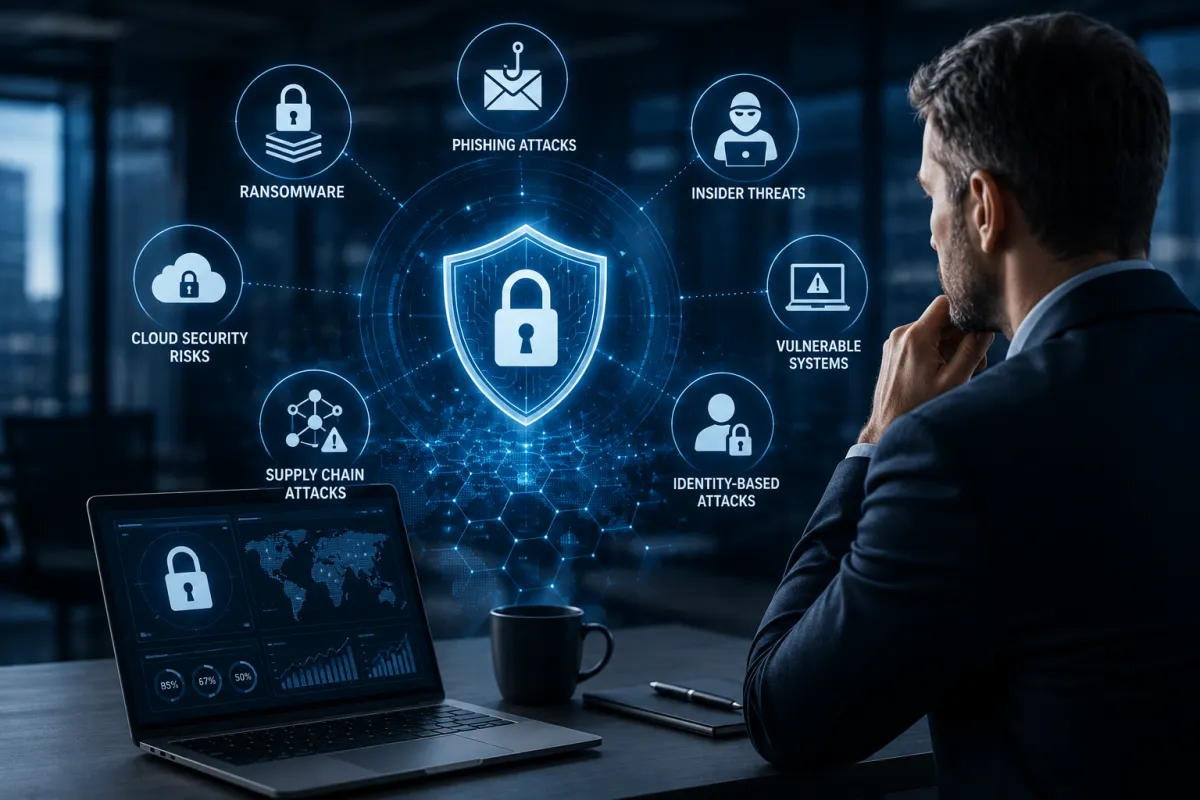
Cybersecurity in 2026: The Top Threats Business Leaders Need to Know
Cybersecurity is no longer just an IT concern. It has become a business issue that directly impacts operations, revenue, customer trust, and long-term growth. As cybercriminals continue to evolve their tactics, organizations of all sizes face increasing pressure to strengthen their defenses and reduce risk.
Business leaders who understand today's threat landscape are better positioned to make informed decisions, protect critical assets, and maintain operational continuity. Here are the top cybersecurity threats organizations should be prepared for in 2026.
1. Ransomware Attacks Continue to Evolve
Ransomware remains one of the most damaging cyber threats facing businesses today. Attackers no longer simply encrypt files. Many now steal sensitive information before locking systems and threaten to release that data publicly unless a ransom is paid.
The impact can include:
Operational downtime
Lost revenue
Regulatory penalties
Reputation damage
Recovery costs
Organizations should maintain secure backups, implement endpoint protection, and regularly test disaster recovery plans.
2. AI-Powered Phishing Campaigns
Artificial intelligence is making phishing attacks more convincing than ever. Cybercriminals can now create highly personalized emails, messages, and fake websites designed to trick employees into sharing credentials or sensitive information.
To reduce risk, businesses should invest in:
Security awareness training
Multi-factor authentication (MFA)
Email filtering solutions
Identity protection tools
Employee education remains one of the strongest cybersecurity defenses available.
3. Supply Chain and Third-Party Risks
Businesses rely heavily on vendors, software providers, and cloud services. Unfortunately, cybercriminals increasingly target these third parties to gain access to larger networks.
Organizations should:
Assess vendor security practices
Limit third-party access
Monitor supplier relationships
Review security requirements regularly
Strong vendor risk management is becoming an essential part of modern cybersecurity strategy.
4. Cloud Security Challenges
As more organizations migrate to cloud platforms, cloud security continues to be a major concern.
Common issues include:
Misconfigured settings
Weak access controls
Excessive permissions
Unsecured data storage
Businesses should regularly review cloud environments and implement security best practices to protect sensitive information.
5. Insider Threats
Not all cybersecurity incidents originate from external attackers. Employees, contractors, and third-party users can unintentionally or intentionally expose organizations to risk.
Implementing least-privilege access controls, user monitoring, and security awareness programs can help reduce insider-related threats.
6. Identity-Based Attacks
Cybercriminals increasingly target user identities instead of devices.
Compromised credentials can provide direct access to email accounts, cloud applications, financial systems, and sensitive business data.
Organizations should prioritize:
Multi-factor authentication
Password management solutions
Conditional access policies
Identity monitoring
Protecting user identities has become a core component of network security and business protection.
Why Proactive Cybersecurity Matters
Many organizations still approach cybersecurity reactively, addressing problems only after an incident occurs. Unfortunately, the cost of recovery is often significantly higher than the cost of prevention.
A proactive cybersecurity strategy helps businesses:
Reduce operational risk
Strengthen network security
Improve compliance readiness
Protect sensitive data
Maintain customer trust
Support business continuity
Many organizations combine cybersecurity services with managed IT services to improve visibility, strengthen defenses, and respond more effectively to emerging threats.
Final Thoughts
Cyber threats are becoming more sophisticated, more frequent, and more costly. Business leaders who proactively address cybersecurity challenges today will be better prepared to protect their organizations tomorrow.
Investing in cybersecurity services, risk management, employee education, and ongoing monitoring can help organizations reduce exposure and build long-term resilience in an increasingly connected digital world.
About The Author
Northern Technology Services is a Northern Michigan managed services provider specializing in cybersecurity services, managed IT services, network security, Microsoft 365 management, backup and disaster recovery, and business IT support for small and mid-sized businesses.